Kun Vikla valloitti Suomen - Days of Pine and Cotton
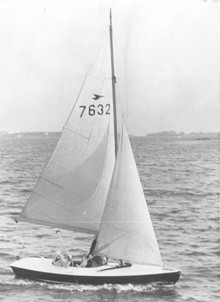
SARJASSAMME HISTORIAN SIIPIEN HAVINAA
Tässä artikkeli, joka julkaistiin vuonna 2008 SnipeBulletin juhlajulkaisussa Snipe 75th Anniversary, kun Snipe Class täytti 75 vuotta. Sama artikkeli löytyy suomeksi Viklahistoriikkikirjasta. Liitteenä myös tuo Snipe 75th Anniversary edition.
It all started in 1947 in Vaasa, where R.W. Lindeman was looking for a sporty
and inexpensive dinghy for the junior sailors of his club WSF. It should be easy to
build by amateurs from the domestic woods, spruce and pine. Through friends in
Norway, he obtained plans for the Snipe, liked what he saw, and quickly sold the
idea to the other clubs in the area. The next summer, seven Snipes were already
racing in Vaasa, headed by 7620 Inger.
The Snipe spread like wildfire along the coast of Finland. In 1948, three snipes
saw the light of day in port city of Kotka: Mikki by Mikko Enegren, 7695 Punajuova
for Antero Enqvist and Kilu-kalle for Keijo Mättö. In 1949, the junior program of
the ASS club in Turku ordered two snipes, 7630 Knoll and 7631 Tott, from the local
boatyard. Experienced sailboat racers such as Olle Palmberg, Karl-Gunnar Käll
ström and Nils-Erik Bjurström also caught the Snipe bug and were instrumental in
setting up the first Finnish Championships in Turku in 1950. In the capital city of
Helsinki, some Snipes were sailing in 1949 at the HSS club, with 15 boats partici
pating in the city championships in 1950. By 1951, some 100 Snipes were afloat in
Finland.
Getting things organized
The string of Finnish Championships continued, with ever growing numbers of en
tries. Finland arranged the Nordic Championships 1951 in Turku and 1955 at
Brändö in Helsinki. Thanks to the efforts of Aarno Walli and Olof Wendell, the offi
cial class organization named Suomen Viklaliitto- Finlands Snipeförbund was re-created in 1956 and affiliated to the Finnish Sailing Association (FSA). (By the way, Vikla is the Finnish name for the Snipe bird). After many years of unofficial affiliation, Finland managed to meet all SCIRA requirements, and on October 1, 1959, Charter 481 was issued to the Helsinki Snipe Fleet. Next in line was the Kotka Fleet 494 in 1959 followed by the Turku Fleet 509 in 1960.
New fleets kept mushrooming. Thanks to commodore Michael Berner, the Pori Snipe Fleet 523 was chartered in 1961, and ran the Finnish Nationals already in 1962. The Vaasa Snipe Fleet 524 was also started in 1961, managing the nation also in 1964. In 1962, the fleets 550 Tampere, 551 Mänttä and 552 Hamina were chartered, followed by 569 Lappeenranta and 570 Kokkola in 1963. Snipe fleets 576 Emsalö, 577 Jakobstad and 578 Hangö received their charter in 1965.
Each fleet had its own ways to spread the Snipe message and keep the Snipe spirit up. In Turku, there was racing by moonlight for the “Källan Cup”. In Helsinki, an annual “Propaganda Race” was held along the shoreline of the city, show ing off the 50-odd boats to thousands of spectators. In Hanko, the annual ranking regattas Williams Cup and Printal Cup were traditionally followed by after-sail visits to the local portside bars. In Kotka, fleet enthusiasts build a series of 12
boats in wintertime in an unheated shed. No wonder that their hardy Snipers enjoy swimming among the ice floes every Easter Friday. They also started a musical band, playing at the weddings of Snipers and their offspring. By 1960, the Kotka snipes numbered 37 boats, the biggest fleet in Finland. Point Score racing was keenly contested in Kotka, with Seppo Raatikainen winning the Hugh Reichner trophy in 1963 for the highest Point Score in the world.
Improving the breed
The first domestic Snipes were built in a robust fashion, with little regard to weight. Masts resembled telephone poles, and sails were stitched from domestically woven cotton by local tentmakers. Centerboards were thick steel plate. No wonder that the Finns were soundly beaten in their early meetings with their Nordic brethren. But Finnish sailors kept visiting the Nordic Championships in Sweden, Denmark and Norway, bringing back fresh ideas about Snipe hulls, sails, rigging and sailing technique.
Dr. Olle Palmberg purchased 7484 Lill-Mon from Sweden and promptly won three consecutive Finnish Nationals, in 1952-54. C-G. Trapp, appreciating the value of a light hull, had 8481 Zsa-zsa built in cedar wood, taking the 1955-56 championships. By purchasing sails of prime cotton
from Elvström of Denmark and Örtengren of Sweden, and copying layouts and fittings from the winners, the level of the Finnish racing started improving. So were the international Snipe relations, especially to Norwegians like Erik Barfod, Leif Husebye, Niels Monstad and Per Skjön
berg, who shared the Finnish ideas about hard racing and partying. A quantum leap in performance was achieved in 1960 when master carpenter Yrjö Halén of Turku started creating his beautiful Snipes in mahogany. Together with knowledgeable clients such as Olympic 5.5 m
yachtsmen Juhani Salovaara and Johan Gullichsen, the legendary Halén snipes were developed towards the ultimate racing machine. Soon, aluminum masts from Proctor, dacron sails from Fragniere or Murphy & Nye, clam cleats and other American state-of-the-art
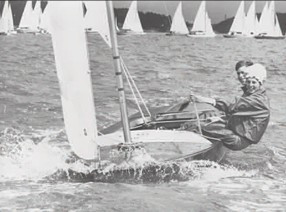
fittings were seen on the top boats. Spurred by keen competition in large fleets of 40-50 boats, Finnish snipe sailors started climbing in the results tables of the World and Regional championships. The high point of the wooden era was reached in 1962, when Juhani Salovaara and Erik Aikala sailing their Halén-built 8493 Amok won a Silver medal at the Europeans in Palma de Mallorca. Later, the fiberglass Snipes would open up a new era, but that is another story.
Looking back, it is clear that the Snipe was instrumental in spreading our wonderful sport of sailing to new layers of people. In the process, a brotherhood of Snipe sailors was created. Many early Snipe racers were later to be found at the helm of successful keelboats and ocean racers. Snipe class enthusiasts such as Michael Berner, Per-Ole Holm, Keijo Mättö, Olle Palmberg, Antti Wahlström and Rafael Wolontis have served as commodores of their yacht clubs, and gone on to important posts within the FSA, SCIRA and ISAF. Present-day Snipers owe our pioneers a vote of thanks.
By Henry Ericsson
Henry sailed his first snipe in 1961, was national secretary for Finland in 1973-75.

Luokittelu:
Mainostilan myynti: hallitus@snipe.fi